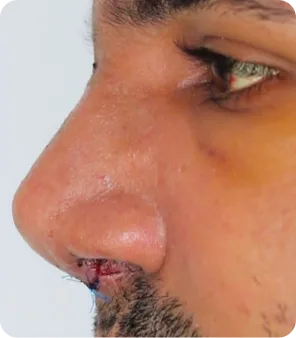
The first days after rhinoplasty
During the first days, swelling, congestion, tenderness and visible changes around the nose and eyes may occur. The medical team should explain these expected signs before surgery.
Follow instructions regarding rest, sleeping position, medications, cleaning and attendance at follow-up visits.
Swelling and the final result
The nose changes gradually. Although patients may notice early improvement, swelling takes time to resolve and depends on skin, technique and individual healing.
The final result should not be judged during the first weeks. Patience is part of the process.
Activities and aftercare
Return to activity should follow medical clearance. Patients are commonly instructed to avoid impact, intense exercise, direct sun exposure and heavy eyeglasses during the specified period.
Exact recommendations vary by case, so general instructions should not replace individualized follow-up.
When to contact the medical team
Contact the team if you experience severe pain, significant bleeding, fever, marked breathing difficulty or any concerning symptom.
If you are considering surgery, review the rhinoplasty procedure and schedule an individualized evaluation.
Why recovery is part of the result
ISAPS lists rhinoplasty among the leading global surgical procedures in 2024. Its popularity leads many patients to search for a fast recovery, but nasal healing should not be rushed. Swelling changes from week to week and definition develops gradually.
Recovery is not passive waiting. It includes follow-up visits, skin care, protection from impact, congestion management, hygiene instructions and a gradual return to activity. Each case progresses differently according to technique, skin, anatomy and individual healing.
Responsible guidance avoids exact promises, does not minimize warning signs and explains that clearance for travel, exercise or eyeglasses depends on the surgeon.
General stages of rhinoplasty recovery
Early recovery may include swelling, bruising, congestion and tenderness. During the next phase, patients gradually resume activity and should avoid judging the final result too soon.
Definition may take longer. Some areas resolve earlier than others, and the nasal tip can change slowly. Follow-up visits help monitor progress and answer questions without comparing one patient's timeline with another's.
Actions that protect the healing process
- Attend follow-up visits even when healing appears normal.
- Do not resume intense exercise before clearance.
- Avoid impact, pressure and direct sun exposure.
- Do not self-medicate for pain, congestion or swelling.
- Contact the team for fever, significant bleeding or unusual pain.
Why recovery timelines are not guarantees
Questions such as “How many days?”, “When can I work?” and “When will I see the result?” are useful, but they should not receive exact promises. Healing depends on technique, swelling, skin, aftercare, general health and follow-up.
General stages can provide orientation, but the surgeon defines specific clearance for exercise, travel, sun exposure, eyeglasses, makeup and impact activities.
How to prepare before surgery
- Arrange transportation and support for the day of surgery.
- Prepare a rest area that allows head elevation.
- Ask how to clean the area and which medications to use.
- Avoid scheduling important events during the first weeks.
- Know the warning signs and contact channels.
How recovery informs the decision to have surgery
Recovery information is useful before surgery as well as afterward. Understanding follow-up, swelling and realistic timelines helps patients considering rhinoplasty plan work, school, travel and social events responsibly.
Many patients feel uncertain about the postoperative period. Clear information helps them prepare for consultation without minimizing risks.
Preparing before surgery can make the postoperative period more manageable and support adherence to the medical team's instructions.
Reference sources: ISAPS Global Survey 2024.
Schedule a personalized evaluation
This article provides general educational information. The right recommendation for your case must be defined during a medical consultation that reviews your history, goals, risks and recovery.
Schedule consultationFrequently asked questions
How long does rhinoplasty recovery take?
It depends on the case. Initial recovery takes weeks, while swelling and nasal definition can continue improving for longer.
Is swelling normal after rhinoplasty?
Yes. Some swelling is expected, and its intensity and duration depend on the technique and individual response.
When can I exercise after rhinoplasty?
Your surgeon should authorize exercise according to healing and the type of activity. Do not resume intense exercise without clearance.
When will I see the final rhinoplasty result?
Results appear gradually. The nose continues to change as swelling resolves.
Do I need follow-up visits after rhinoplasty?
Yes. Follow-up visits monitor healing, swelling and the progress of the result.