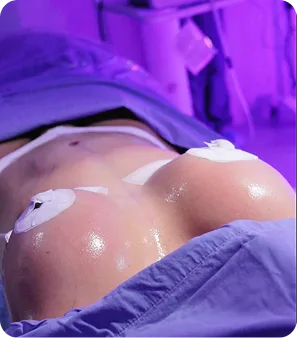
A breast implant rupture is a tear or opening in the implant shell. Its presentation depends partly on whether the implant contains saline or silicone gel. Implant age, trauma, capsular contracture and prior procedures can be relevant, but none of these establishes a diagnosis without evaluation.
This page is educational. If you notice a new breast or implant change, contact a qualified healthcare professional rather than relying on photographs, self-examination or an online symptom list.
Saline implant deflation and silicone implant rupture are different
When a saline implant ruptures, the sterile saline is absorbed and the breast commonly loses volume or changes shape over hours or days. The FDA uses the term deflation specifically for saline-filled implants.
Silicone gel often remains inside the capsule of scar tissue around the implant. A rupture may therefore produce little or no visible change. It can remain intracapsular or, in some cases, extend beyond the capsule.
Possible changes associated with silicone implant rupture
The FDA lists possible changes such as decreased breast size, altered implant shape, hard lumps, uneven appearance, pain or tenderness, tingling, swelling, numbness, burning or other changes in sensation. These findings are not specific to rupture and may occur with other implant or breast conditions.
- A new difference in breast size, shape or symmetry.
- New firmness, a lump or a change around the implant or chest.
- Pain, tenderness, swelling or a change in sensation.
- Known trauma or a change that develops after another breast procedure.
No single item on this list confirms that the shell is damaged. Capsular contracture, infection, a fluid collection and breast tissue conditions require different assessment and should not be self-diagnosed as rupture.
Why a silicone rupture can be silent
According to the FDA, many silicone gel implant ruptures are silent: the patient and clinician may not detect them from appearance or physical examination alone. This is why the absence of pain or visible change does not prove that a silicone implant is intact.
Breast implants are not lifetime devices. Long-term follow-up should include the implant card, manufacturer information, operative history and the screening plan discussed with the treating team.
How a suspected rupture is evaluated
Evaluation begins with history, implant type and age, symptoms, examination and previous imaging. The American College of Radiology distinguishes the appropriate test by implant material, symptoms and patient context rather than naming one study for every patient.
Current FDA labeling recommends ultrasound or MRI for periodic screening of asymptomatic silicone gel implants beginning five to six years after placement and every two to three years thereafter. For symptoms or an equivocal ultrasound, MRI may be recommended. These intervals do not replace breast cancer screening or an individualized plan.
A clinician should order and interpret imaging. Mammography may occasionally show a rupture, but breast cancer screening and implant-integrity evaluation answer different questions.
Changes that require prompt or urgent medical guidance
Contact a healthcare professional promptly for any new abnormal breast or implant change. Severe or rapidly increasing pain, sudden swelling, marked redness, fever, drainage, recent significant trauma, chest pain or breathing difficulty require urgent assessment. These findings may reflect complications other than rupture.
Do not massage, compress or attempt to test an implant yourself. If surgery or monitoring is recommended, the decision should account for implant type, imaging, symptoms, capsule, breast tissue, risks and personal goals.
Information to prepare for an implant evaluation
- Implant card, manufacturer, model and placement date when available.
- Operative reports and any previous ultrasound, MRI or mammography.
- When the change began and whether trauma or another procedure occurred.
- Pain, swelling, firmness, asymmetry or sensory changes.
- Medications, medical history and breast cancer screening history.
Breast implant leakage signs: what a change does not prove
| Change or situation | What it cannot confirm | Next discussion |
|---|---|---|
| Saline implant loses volume | The complete treatment plan from appearance alone. | Implant type, timing and clinical assessment. |
| New silicone implant pain, firmness or shape change | Rupture rather than another breast or implant condition. | Examination and appropriate imaging. |
| No obvious symptoms | That a silicone implant is intact. | The follow-up and screening plan. |
| A photograph or online checklist | A definitive rupture diagnosis. | Records, implant card and healthcare evaluation. |
Use the FDA and ACR references below when discussing evaluation; no single imaging test is prescribed here for every patient. Read augmentation versus lift for different procedure goals, not as a substitute for implant assessment. The doctor's profile provides professional background and consultation information.
New implant changes deserve an individual assessment
An examination and the appropriate imaging can distinguish suspected rupture from other breast or implant conditions.
Request a consultationFrequently asked questions
What are possible signs of a ruptured breast implant?
Saline implants often lose volume when they deflate. Silicone rupture may be silent; possible changes include altered shape or size, lumps, asymmetry, pain, tenderness, swelling or changes in sensation. No single symptom confirms rupture.
Can a silicone implant rupture without symptoms?
Yes. The FDA describes many silicone implant ruptures as silent, which means neither appearance nor physical examination alone may identify them. Imaging and clinical evaluation may be needed.
Which test checks a silicone implant for rupture?
The appropriate study depends on symptoms, implant type, age and prior imaging. FDA labeling and ACR criteria use ultrasound or MRI without contrast in defined situations; a clinician should select the study for the individual case.
Does a ruptured implant always require emergency surgery?
Not every suspected rupture has the same urgency, but new breast changes should be assessed promptly. Severe pain, rapid swelling, redness, fever, drainage, trauma or systemic symptoms require urgent medical guidance.
Does this article replace an implant check?
No. An online guide cannot determine whether an implant is intact or distinguish rupture from capsular contracture, infection, fluid collection or another condition.
Primary references: FDA: risks and complications of breast implants; FDA breast implant labeling recommendations; ACR Appropriateness Criteria: breast implant evaluation.