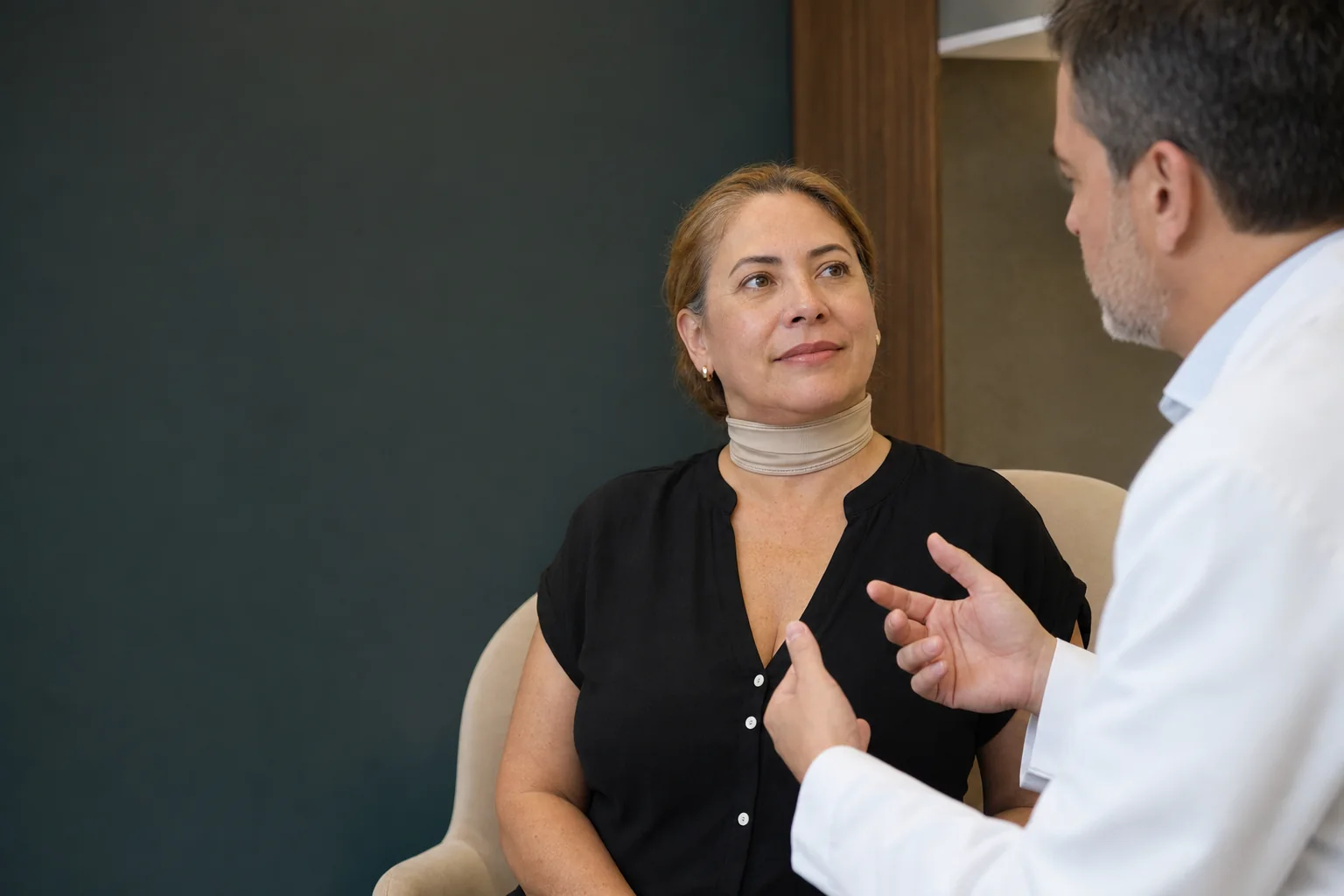
Recovery is part of the outcome of a facelift in Colombia. Visible improvement begins as swelling and bruising decrease, but tissues, skin sensation and scars continue changing for a longer period. Being ready for a social event or returning to work does not mean healing is complete.
This guide explains general stages rather than personal instructions. The surgical technique, extent of treatment, medical history and individual response can all change the recovery plan.
General facelift recovery stages
The first 48 hours
The medical team may use bandages and, in some cases, temporary drains. Swelling, tightness and altered sensation can occur. A responsible adult should be available for transportation and initial support.
Follow the instructions for medication, sleeping position, hygiene, meals and care of the treated area. Do not remove dressings, apply skin products or change medication doses without guidance.
The first week
Follow-up appointments allow the team to evaluate incisions, swelling and overall progress. The timing for changing dressings or removing drains and sutures depends on the technique and the surgeon's assessment. Appearance can change from one day to another and does not predict the final result.
Activities remain gentle. Walking may be appropriate when cleared, but bending, lifting and strenuous movement can increase pressure and swelling.
Weeks two and three
Some patients feel more comfortable returning to low-demand social or work activities, but this is not a universal timeline. Residual swelling, tightness, altered sensation or temporary asymmetry may still be present.
Makeup, skincare products, hair appointments and sun exposure should resume only when cleared. Incisions near the ears and hairline still require protection.
Week four and beyond
Facial definition continues improving as tissues settle. Physical activity can increase gradually after the surgeon confirms that healing allows it. Scars continue maturing for months and should be reviewed during follow-up.
The American Society of Plastic Surgeons notes that a patient may feel presentable before facial texture, sensation and tightness feel fully normal. This distinction is useful when planning work, travel and major events.
Swelling, tightness and changes in sensation
Swelling does not always decrease in a straight line. It can vary between sides and temporarily increase after activity, heat or later in the day. Tightness and numbness can also occur during early recovery.
These changes need context. Mild expected discomfort is different from severe pain, rapidly increasing swelling or a sudden skin color change. Contact the medical team rather than waiting for the next appointment when something feels unusual.
Incision care and scar maturation
Facelift incisions are commonly planned around the ear and hairline according to the surgical technique. Follow the specific instructions for cleaning, approved products and protection.
- Do not use creams, makeup, alcohol or home remedies without approval.
- Avoid force, friction and pressure over healing incisions.
- Choose clothing that does not need to be pulled tightly over the head.
- Protect healing skin from the sun as directed.
- Discuss smoking before surgery because it affects wound healing.
Scars change in color, thickness and texture as they mature. Comparing one patient with another is not a reliable way to predict healing.
Returning to work, exercise and international travel
The right time to return depends on job demands, healing and access to follow-up. Remote work is different from a job involving lifting, heat, sun exposure or continuous physical activity.
Intense exercise is avoided until cleared because it may raise blood pressure, swelling and bleeding risk. Activity should increase in stages, beginning with lower-impact movement.
International patients should plan enough time in Medellin for the surgeon's required follow-up visits. A flight date should not be based on airfare alone. Confirm your companion, accommodations, luggage restrictions and the follow-up plan after returning home before booking travel.
When to contact the medical team
You will receive individual instructions about expected symptoms and contact channels. Report concerning changes, particularly severe or increasing pain, significant bleeding, fever, breathing difficulty, sudden skin changes, unusual drainage or swelling that increases rapidly.
Shortness of breath, chest pain or irregular heartbeats require immediate medical attention. Online information should never be used to diagnose a complication.
Questions to ask before surgery
- Who should I contact if I have a concern outside regular office hours?
- Which medications need adjustment and who must authorize the change?
- How should I care for dressings, incisions and possible drains?
- When can I wash my hair, wear makeup and drive?
- Which follow-up visits are required before flying or exercising?
Recovery also affects planning and budget. Our guide to facelift cost in Colombia explains why surgical scope, facility, anesthesia and follow-up are considered during a personal consultation.
Medical references: American Society of Plastic Surgeons: Facelift Recovery, Facelift Risks and Safety, and Facelift Results.
Plan recovery during your consultation
A personal consultation reviews health history, goals, possible technique, risks, support at home and the time available for follow-up. The final plan is always individual.
Schedule a consultationFrequently asked questions
How long does facelift recovery take?
Recovery happens in stages. People may gradually resume social activities, while swelling, sensation and scars continue changing for weeks or months. Your surgeon must define your individual timeline.
When can I return to work after a facelift?
Timing depends on your work, surgical plan and healing. Clearance should be based on a follow-up evaluation rather than appearance alone.
Are tightness and numbness normal after a facelift?
Temporary tightness, altered sensation or numbness may occur. Severe, progressive or concerning changes should be reported to the medical team.
When can I exercise after a facelift?
Exercise should restart gradually and only after the surgeon clears it. Intense activity can increase swelling, blood pressure and bleeding risk.
When will I see the final facelift result?
The result becomes clearer as swelling and sensory changes resolve. A final assessment should not be made during the first few weeks.